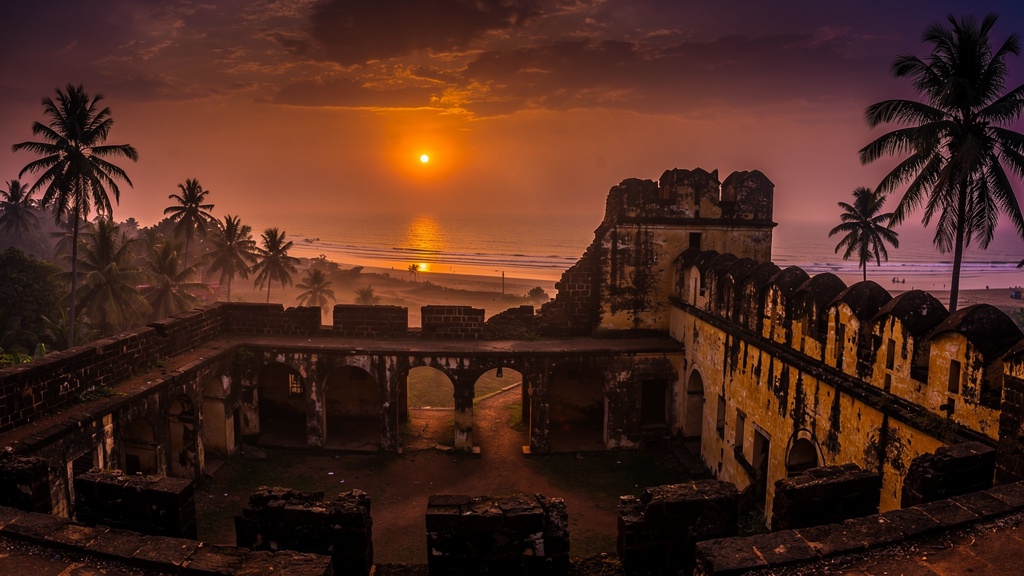
Vasai Fort (Bassein Fort)
The magnificent Portuguese fortress — a 110-acre wonder of history, architecture, and nature reclaiming its space.
The Fortaleza de São Sebastião de Baçaim
Vasai Fort (also called Bassein Fort or Fortaleza de São Sebastião de Baçaim) is one of the most impressive Portuguese fortifications in Asia. Built between 1536 and 1549, this massive 110-acre fortress was the capital of the Província do Norte (Northern Province) of Portuguese India — a thriving city with grand churches, monasteries, a mint, and a bustling port.
After the Maratha conquest by Chimaji Appa in 1739 and later British neglect, the fort fell into ruin. Today, it is an Archaeological Survey of India (ASI)-protected monument, with laterite stone walls, towering bastions, and atmospheric ruins that have become a paradise for history buffs, photographers, and explorers.
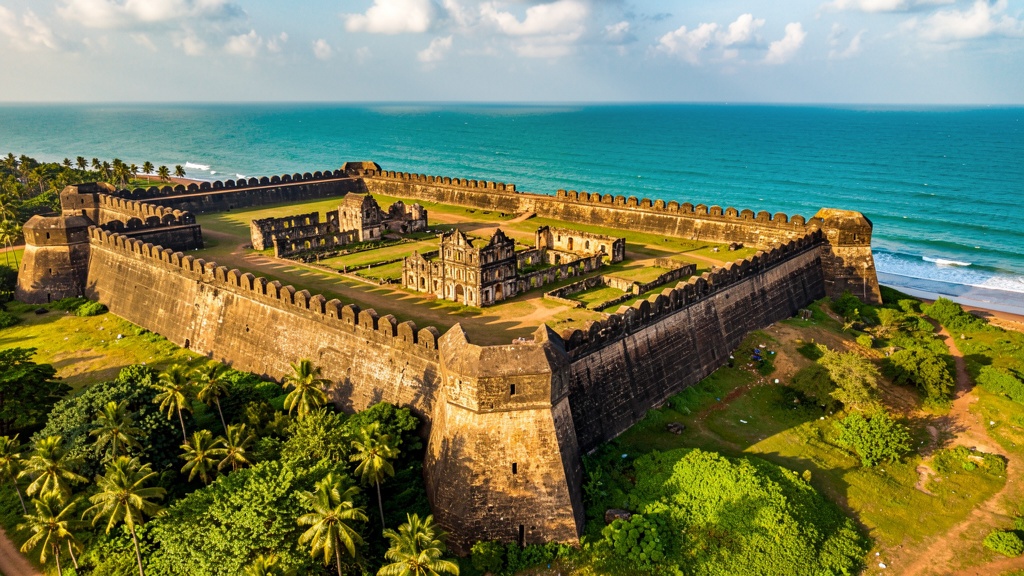
The sprawling 110-acre fort complex as seen from above — note the star-shaped bastions typical of Portuguese military architecture.
What to See Inside the Fort
The fort has 10 bastions (each named after a Catholic saint), 9 gates, and numerous structures within its walls:
- The Main Entrance (Porta do Mar / Sea Gate) — The grand entrance facing the creek, flanked by two massive bastions.
- St. Joseph's Cathedral (Sé Catedral) — The largest church ruin inside the fort, with three naves and impressive arches.
- St. Paul's College — A former Jesuit college, one of the oldest European educational institutions in Asia. St. Francis Xavier is said to have stayed here.
- Porte de Terra (Land Gate) — The eastern entrance with a beautifully carved arch.
- The Governor's Palace — Ruins of the residence of the Portuguese captain of the fort.
- Dominican Convent & Franciscan Monastery — Religious structures showcasing different orders' architecture.
- The Magazine House — Where ammunition and gunpowder were stored.
- Bastions — Climb the bastions for stunning views of the surrounding landscape and the creek.
The entire fort is a delightful maze of crumbling pathways, hidden doorways, and wild vegetation. Banyan trees have grown over many walls, their roots creating surreal patterns — a favorite subject for photographers.
History at a Glance
| Period | Key Events |
|---|---|
| 1534 | Sultan of Gujarat cedes Vasai to the Portuguese under the Treaty of Bassein |
| 1536–1549 | Construction of the fort; completion of its 10 bastions |
| 1548 | St. Francis Xavier visits and stays at St. Paul's College |
| 1739 | Chimaji Appa captures the fort for the Marathas after a three-month siege (16 May) |
| 1774 | British East India Company takes control |
| 20th C. | Declared an ASI-protected monument; ongoing restoration |
Arnala Fort
Arnala Fort (also called Jaldurg or Janjire-Arnala) is a smaller island fort located off the coast near Arnala village, about 15 km from Vasai Fort. Built by the Portuguese and later strengthened by the Marathas, it sits on a rocky island in the Arabian Sea.
How to reach: Take an auto from Vasai Road station to Arnala jetty (~30 minutes), then a short boat ride to the island. Boats are available when the sea is calm (best in October–May). The fort is smaller and more rugged than Vasai Fort, with fewer structures intact but offering a unique adventure.
Tip: Combine Arnala Fort with a visit to Arnala Beach nearby for a half-day trip.
Photography Tips
- Golden hour (sunrise or sunset) provides the best light for the laterite walls and ruins.
- The banyan tree roots on the walls make for dramatic compositions.
- Wide-angle lenses are ideal for capturing the scale of the bastions and cathedrals.
- Monsoon brings lush greenery but overcast skies; post-monsoon (October) offers clear light and green landscapes.
- Drones are not permitted without prior ASI permission.