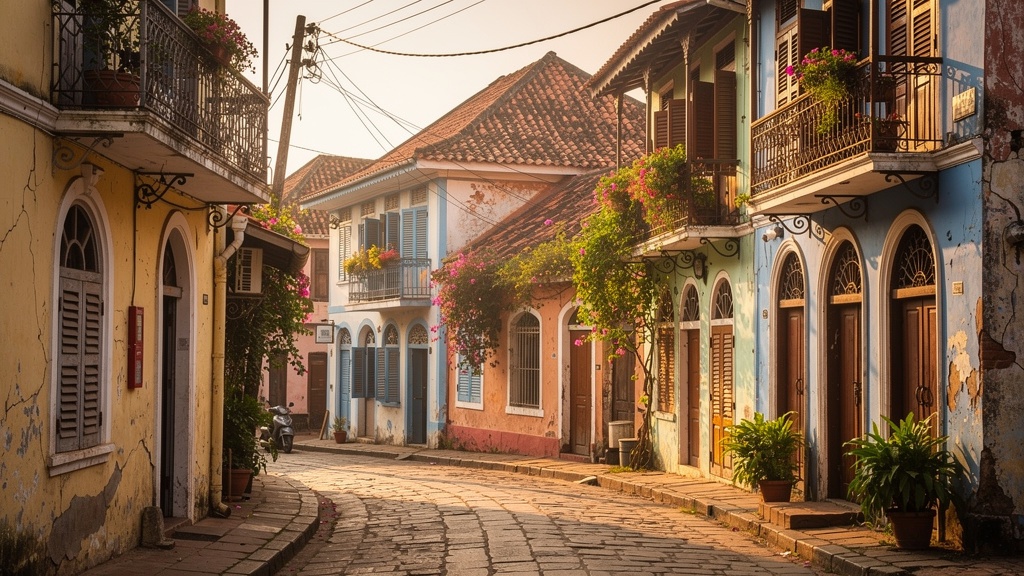
About Vasai & Its Rich History
From a thriving Portuguese city to a Maratha stronghold — the story of Vasai is etched in laterite stone.
Vasai: A Crossroads of Cultures
Vasai (formerly Baçaim under the Portuguese, later Bassein under the British) is a historic coastal town in the Palghar district of Maharashtra, approximately 50 km north of Mumbai. For centuries, it was one of the most important Portuguese settlements on the west coast of India, rivaling Goa in strategic and commercial importance.
Today, Vasai-Virar is a bustling municipal corporation, yet it retains a unique cultural identity shaped by Portuguese, Maratha, and British influences. The region is known for its East Indian Catholic community (Konkani-speaking Christians who converted during Portuguese rule), its distinctive cuisine, and the spectacular ruins of the Fortaleza de São Sebastião de Baçaim — Vasai Fort.
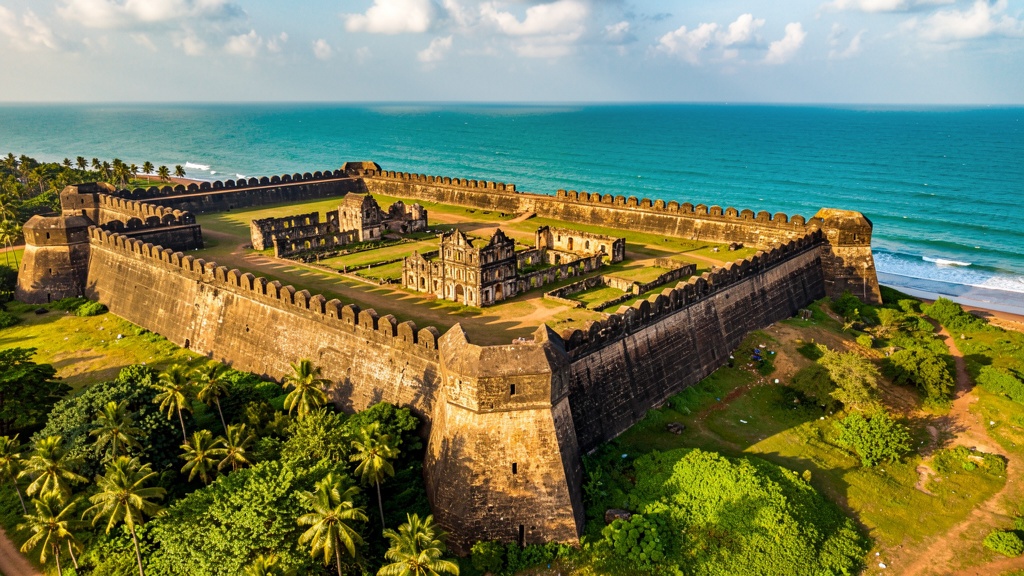
The sprawling Vasai Fort complex — once the heart of Portuguese power in the northern Konkan coast.
Timeline of Vasai's History
Vasai's story spans over two millennia, but its most transformative period began with the arrival of the Portuguese in the 16th century.
The region was part of various local kingdoms, including the Mauryas, Chalukyas, Rashtrakutas, Silhara dynasty, and the Gujarat Sultanate. The town of Vasai was a port and trading center known to Roman and Arab merchants.
The Portuguese under Francisco de Almeida destroyed the local fleet near Chaul. By 1534, the Sultan of Gujarat ceded the region of Baçaim (Vasai) to the Portuguese through the Treaty of Bassein.
The Portuguese built the massive Fortaleza de São Sebastião de Baçaim, completed around 1549. The fort covered 110 acres with 10 bastions, 9 gates, and was considered one of the strongest fortresses on the west coast.
Vasai flourished as the Província do Norte (Northern Province) of Portuguese India. The city had grand churches, convents, monasteries (St. Paul's College, the Dominican convent, Franciscan monastery), a mint, and a thriving trade in textiles, spices, and salt. Missionaries including St. Francis Xavier visited.
Chimaji Appa, the brother of Peshwa Baji Rao I, led the Maratha campaign against the Portuguese. After a fierce three-month siege, the Marathas captured Vasai Fort on 16 May 1739. This victory is celebrated as Vasai Vijay Utsav to this day. The Marathas renamed it Bajiravachi Vasai.
In 1774, the British East India Company took control of the fort. Vasai lost its strategic importance and the fort gradually fell into disrepair. The town remained a quiet agricultural and fishing center through the British Raj.
After Indian independence, Vasai became part of Maharashtra. The Vasai-Virar Municipal Corporation was formed to manage the growing urban population. The fort has been an ASI-protected monument since the 1970s and is undergoing ongoing restoration. Today, Vasai is rediscovered as a heritage and tourism destination — the "Mini Goa" near Mumbai.
The East Indian Culture
One of Vasai's most distinctive features is its East Indian community — the original Catholic converts from the Portuguese era, distinct from Goan Catholics. They speak a dialect of Marathi-Konkani blend, have unique culinary traditions, and celebrate festivals like Bandi and Kuswar (Christmas sweets). The East Indian culture is a living link to Vasai's Portuguese past.
Marathi, Hindi, and English are widely spoken throughout Vasai-Virar, making it accessible to visitors from across India and abroad.
Vasai Today
Modern Vasai-Virar is a rapidly growing suburban city and an important railway junction on the Western Railway line. Despite urbanization, the historic core — especially around the fort and the old Portuguese quarters — retains its charm. The beaches along the Vasai coast offer a peaceful retreat, and the surrounding hills and forests provide trekking and nature opportunities.
The name "Mini Goa" has stuck because of Vasai's Portuguese-era churches, coastal setting, seafood, and the relaxed vibe that reminds visitors of Goa — but without the crowds and high prices.